


Mob Mentality: Predictable Human Behavior, Engineered Manipulation, and the Dangers of Division
- Charles "Ghost" Coutts

- Apr 27
- 9 min read
(Opinion, Sociology/Psychology) For informational and educational purposes only) NOTE: This piece excludes groups such as ANTIFA, BLM, etc., as these types of groups/organizations are a separate entity altogether. I will get around to them soon enough.
Mob mentality—also known as herd mentality, crowd psychology, or groupthink—refers to one of the most predictable and extensively studied aspects of human behavior. For over a century, psychologists have analyzed how individuals within large, emotionally charged groups tend to abandon personal judgment, adopt collective impulses, and engage in actions they would never consider doing alone. It’s important to clarify that while peaceful protests should not be labeled as "mobs," the underlying mentality that drives both peaceful protests and mob behavior stems from the same fundamental aspect of human nature. This is where manipulation plays a significant role: by controlling what people think, one can also influence what they do. One more thing to remember. One does not have to be physically present to be part of a mob.
These dynamics are not accidental or mysterious; they are well-documented, reliable patterns that those in positions of influence—governments, media outlets acting as proxies, wealthy donors, and activist networks—have long understood and deliberately exploited. By crafting emotional narratives, sometimes through outright lies about critical events, they trigger deindividuation and conformity on a mass scale. This manipulation lies at the heart of the recent explosion in paid protesters flooding American streets: not to express genuine grassroots outrage, but to manufacture division, sway public opinion, and foster hatred toward the “other side.” No righteous cause ever requires its supporters to hate another person or group of people. When hatred and dehumanization become central to the message, it is not a cause—it is psychological manipulation for political power. A very old and well-known psychological manipulation for those who study history.
The core psychology stems from deindividuation: in a crowd, not necessarily a "mob," people experience anonymity, reduced self-awareness, and diffusion of responsibility, making them feel less accountable for their actions. Factors include loss of individual identity, heightened emotions (excitement, anger, hostility), conformity to the group’s perceived norms, and the sense that “everyone else is doing it,” which overrides personal morals or restraints. This is when a protest can develop into a mob. Classic experiments (e.g., Asch’s conformity studies) and theories from Gustave Le Bon onward show how crowds amplify irrational or antisocial behavior; people act in ways they wouldn’t alone because personal controls weaken. These behaviors are entirely predictable—and therefore entirely exploitable by those who control the narrative.
One particularly compelling framework that builds directly on these classical insights—and explains large-scale societal outbreaks of mob behavior—is mass formation theory (often referred to as mass formation psychosis), developed by Belgian clinical psychologist Dr. Mattias Desmet. The theory identifies four preconditions that, when present simultaneously in a population, create a fertile ground for collective hypnosis: widespread loneliness and lack of social bonds; a pervasive loss of meaning or “sense-making” in life; free-floating anxiety that has no clear object; and free-floating psychological discontent or aggression.
Once these conditions exist, authorities or media channels can introduce a single, focused narrative that identifies an “enemy” or problem and offers a simple strategy to confront it.
If you follow my writing, you are familiar with Hegel: Create the problem (Thesis), create opposition to the problem (antithesis), then present the solution to the problem (synthesis).
This narrative acts like a hypnotic spell: it channels the diffuse anxiety, restores a sense of meaning and solidarity within the group, and suspends critical thinking. Dissenters are vilified, contradictions are ignored, and individuals act in lockstep—even supporting policies or behaviors they would reject in normal circumstances. While not formally recognized as a clinical diagnosis in mainstream psychology, the theory makes profound intuitive sense because it aligns precisely with observable historical and contemporary patterns of how predictable human vulnerabilities are cultivated and weaponized on a societal scale.
Real-world U.S. examples abound. Historical cases include the 1863 New York Draft Riots (racial violence amid economic resentment), lynch mobs during the Jim Crow era, the 1921 Tulsa Race Massacre, the 1992 Los Angeles Riots following the Rodney King verdict, and numerous race riots during the Red Summer of 1919 and other periods of racial tension. In many of these, ordinary citizens were swept into violence, looting, or destruction they might never have initiated individually. Modern instances, such as the Ferguson unrest following the 2014 shooting of Michael Brown, illustrate media-fueled escalation: initial eyewitness accounts and widespread media amplification of the false “hands up, don’t shoot” narrative directly contributed to riots, destruction, and a national movement, only for the Obama-era DOJ investigation to later confirm the claim was untrue.
These dynamics pose serious dangers to an individual’s psyche and mental stability. Deindividuation erodes personal accountability, leading to actions that clash with one’s core values and causing post-event guilt, shame, cognitive dissonance, or radicalization. Participants may later experience anxiety, depression, PTSD from exposure to or involvement in violence/trauma, or a fractured sense of self as individual identity is subsumed by the group. Long-term, it can foster paranoia, isolation from non-group members, or habitual reliance on mob validation, destabilizing mental health and moral framework. When these mobs are deliberately triggered by manipulated narratives—or amplified through mass formation processes—the psychological harm is compounded: individuals are not only victimized by the crowd but by the architects who engineered the outrage.
Media as the Spark: Deliberate Manipulation of Predictable Behaviors to Cause Fear/Anxiety
Remember this?
Because mob psychology and mass formation dynamics are so predictable, media outlets—often functioning as proxies for larger political or financial interests—have repeatedly been caught flat-out lying or suppressing key facts on major issues to ignite emotional responses and division. The Ferguson case is a textbook example: national media uncritically amplified a fabricated narrative that led to sustained riots and shaped a broader “systemic racism” framing that persists to this day, despite later official findings debunking the core claim. Similar patterns appear in other high-profile cases where rushed, false portrayals (such as the Covington Catholic students incident, where initial media narratives of racism were disproven by full video evidence, leading to widespread harassment) demonstrate how selective editing and storytelling exploits crowd conformity and mass formation conditions to manufacture public outrage. These are not isolated errors; they are predictable tactics that leverage known human vulnerabilities to polarize society, prime the ground for further unrest, and set the stage for both organic protests and, more recently, heavily financed and organized operations utilizing paid protesters.
The Rise of Paid Mob Mentality: The Engineered Extension of Manipulation
Pay very close attention to what this person says. Lawrence does a very good job of getting him to say the quiet part out loud. Make up your own mind how you feel about it.
A newer phenomenon overlays these natural crowd dynamics: paid mob mentality, where individuals join crowds and engage in civil unrest or public disruption not out of genuine conviction but for compensation. These participants often have little or no personal stake in the issues and are deployed for a specific reason, to amplify chaos, create division, or escalate events. This is distinct from voluntary activism and represents astroturfing—manufactured “grassroots” action funded and orchestrated by external actors. The recent surge in such paid operations is the logical extension of the media-driven manipulation strategy: first, narratives (sometimes false) create the preconditions of anxiety and discontent (think about the COVID video you watched earlier); then, funded networks supply the bodies, logistics, and escalation to turn sparks into conflagrations—all designed to sway opinion by portraying one side as hateful oppressors. (IE, the demonization of the unvaccinated during COVID) All while doing everything they accuse the other side of.
"Always accuse your opponent of what you are guilty of as you are doing it to create confusion." ~Marxist Tactic for Overthrowing an Established System
Evidence confirms this as a growing U.S. concern. Firms like Crowds on Demand (as seen in the video above) openly advertise hiring people for protests (peaceful or otherwise), with industry insiders noting increased demand and the role of compensated participants. Reports document bused-in groups, pre-staged supplies, professional organizers, and recurring agitators at large-scale events. Funding trails lead to organized networks of foundations, nonprofits, and donors providing grants for “direct action,” training, and mobilization. These patterns—planning, out-of-state transport, coordinated tactics—reveal the manipulation.
Natural Grassroots vs. Paid/Organized Protests
Authentic grassroots protests are spontaneous and emerge from immediate grievances. They typically start small, with local individuals gathering organically, and grow through word-of-mouth or social media. These protests do not rely on centralized funding or logistics and reflect genuine sentiments without extensive planning, identical signage, or external transportation. However, it is important to note that organized marches can arise from grassroots events once they gain sufficient support; for example, Martin Luther King Jr.'s march on Washington serves as a notable instance of this.
In contrast, many large-scale unrest events show hallmarks of organization: pre-planned coordination (months, even years ahead), busing from out-of-state, uniform supplies, professional agitators, and funding from nonprofits or networks. This is manipulation—simulating mass outrage to influence policy, media narratives, or elections while masking the true drivers. The presence of paid or professional elements turns organic expression into a tool for division, often amplified by media framing that encourages hatred of the opposing side and exploits mass formation conditions.
Exposing the Manipulators and the Terrorism Label
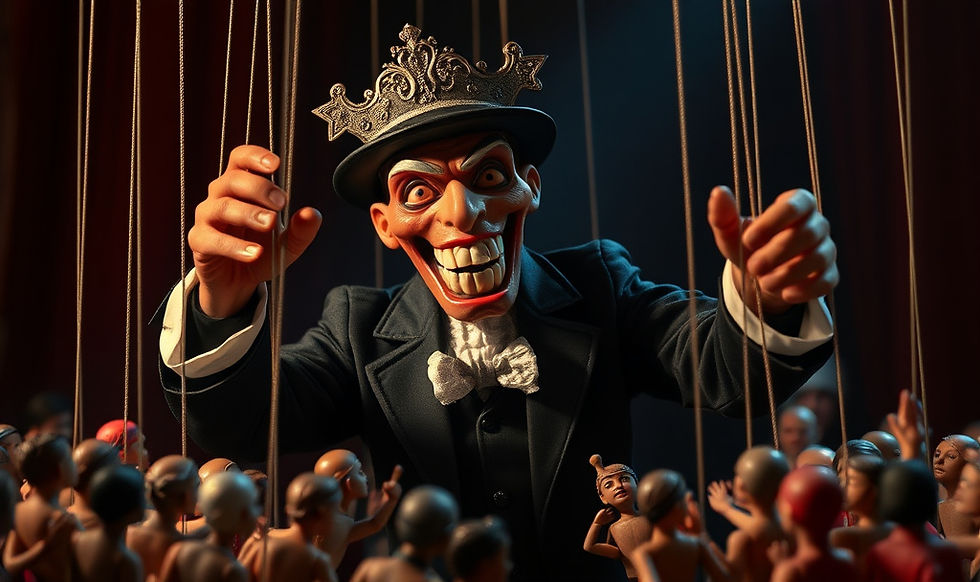
The architects include a network of wealthy donors, foundations, affiliated nonprofits, professional organizers, and media proxies that provide grants, training, mobilization, and narrative support for “direct action.” While many claim to support only lawful advocacy, the downstream effects—escalation into violence, property destruction, and intimidation—have been documented in after-action reviews, arrests, and industry admissions.
When these paid/organized efforts involve intimidation, mass destruction, violence, or threats against civilians to coerce political or social change, they meet the U.S. legal definition of domestic terrorism (18 U.S.C. § 2331): acts dangerous to human life that violate criminal laws and intend to intimidate or coerce a civilian population or influence government policy. Riots causing massive damage, targeted harassment, or pre-planned disruption for ideological ends cross from protest into terrorism. This manufactured conflict—natural mobs alongside engineered ones—exacerbates societal division for political gain.
My question is, why is this not being enforced?
In summary, mob mentality exploits well-known, predictable human psychology for chaos, but the deliberate injection of media deception, paid actors, and external orchestration—amplified by conditions ripe for mass formation—transforms it into a weapon of division. Recognizing the difference between spontaneous, righteous outrage and funded, narrative-driven manipulation is essential to preserving genuine civic discourse, mental stability, and societal cohesion. Above all, remember: no truly righteous cause demands hatred of fellow humans. When it does, the mask slips—it is manipulation, plain and simple.
To illustrate how media deception primes the conditions for mob mentality and mass formation, here is a curated list of high-profile U.S. cases where major outlets promoted narratives later proven to be outright false (in some instances with evidence of reckless disregard or coordination). These examples fueled division, unrest, and hatred—precisely the outcomes that benefit manipulators:
Ferguson “Hands Up, Don’t Shoot” (2014): National media widely amplified eyewitness claims that Michael Brown was shot while surrendering with his hands raised. The Obama-era DOJ investigation found these accounts inconsistent with physical and forensic evidence; no credible witness supported the narrative. Washington Post columnist Jonathan Capehart admitted: “‘Hands Up, Don’t Shoot’ Was Built on a Lie.”
Covington Catholic Students Incident (2019): Outlets rushed to portray Kentucky high school students (including Nick Sandmann) as racist harassers of a Native American elder based on an edited video. Full footage and subsequent investigations showed the students were approached and taunted; Sandmann’s defamation lawsuits led to settlements with The Washington Post, CNN, and NBC.
Jussie Smollett Hate Crime Hoax (2019): Major networks and outlets extensively covered actor Jussie Smollett’s claims of a racist, anti-gay attack as emblematic of broader societal hate. Chicago police and a jury determined Smollett staged the incident himself; he was convicted of disorderly conduct (later overturned on procedural grounds, but the hoax evidence remains unchallenged).
Hunter Biden Laptop as “Russian Disinformation” (2020): Dozens of former intelligence officials signed a letter (widely cited by media) claiming the New York Post’s reporting on Hunter Biden’s laptop bore “all the classic earmarks of a Russian information operation.” The laptop and emails were later authenticated by multiple outlets, including The New York Times, with no evidence of Russian involvement.
Kyle Rittenhouse Coverage (2020): During and after the Kenosha unrest, prominent media portrayed Rittenhouse as a white supremacist vigilante murderer. Trial evidence and acquittal on all charges showed self-defense; post-verdict analysis highlighted how biased reporting inflamed public division.
January 6 Capitol Events (2021): Major media outlets, including The New York Times, CNN, and others, initially reported that Capitol Police Officer Brian Sicknick was beaten to death with a fire extinguisher by Trump supporters. This narrative (and similar claims of multiple officers murdered by the mob) was widely amplified and used to portray the event as far deadlier than the facts supported. The D.C. Chief Medical Examiner later ruled Sicknick died of natural causes (two strokes) the following day, with no evidence of blunt force trauma. Ashli Babbitt, an unarmed Air Force veteran, was the only person killed by direct violence that day—she was shot by Capitol Police Lt. Michael Byrd. Three other Trump supporters died from medical emergencies (heart issues or overdose). The initial false reporting significantly contributed to national division and justified extreme political responses.
Your next move should be asking yourself why they lied at all, because that is the common thread that pulls everything else together.


Comments